
Most business owners don’t realize their website should function like a full-time sales system, not a static brochure.
In the video below, Dr. Mayo explains how visibility, traffic, and local demand data work together, and why most businesses struggle to turn their websites into consistent lead sources.
The Real Problem Isn’t Your Website, It’s How It’s Being Used

You launched your business.
You built a website.
You were told customers would “find you.”
And then… not much happened.
Maybe a few form fills.
Maybe the occasional call.
But nothing close to what you expected.
So you start wondering:
“Was this even worth it?”
Here’s the truth:
The problem isn’t your business.
The problem is how your website is being used.
Most websites aren’t broken, they’re just underutilized.
Your Website Should Work Like a Sales System, Not a Brochure
In sales, everyone understands the math:
100 calls → 10 meetings → 2 closed deals
Or in retail:
500 visitors → 50 conversions → $10,000 in revenue
But most business owners don’t apply this same logic to their website.
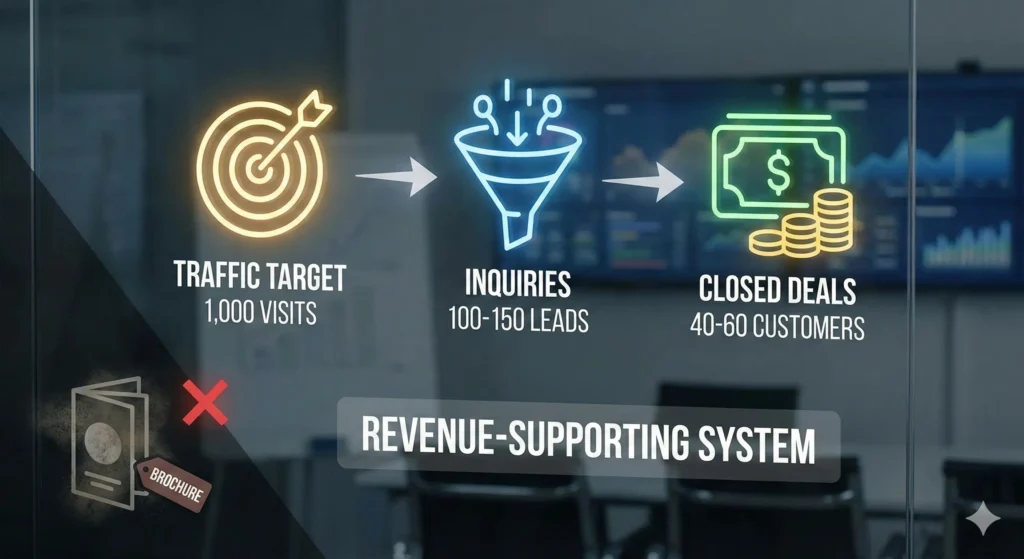
Your website should have a traffic target, just like a sales rep has a quota.
For example, a local service business might need:
• 1,000 website visits per month
• To generate 100–150 inquiries
• To close 40–60 customers
That’s how a website should contribute to your business:
as a revenue-supporting system, not a digital placeholder.
The Missing Layer: Local Demand Intelligence

Most businesses guess where their customers are.
The smarter ones look at real data.
In one city, people might search:
• “Corporate IT support”
• “Business computer repair”
In another:
• “Cheap computer repair near me”
• “Same-day laptop repair”
And in another:
• “Professional IT services”
• “Managed tech support”
This information changes everything.
It tells you:
• Where demand actually exists
• Which searches signal high intent
• Which areas justify your budget
• What messaging will resonate
• What markets are worth pursuing
Instead of guessing, you can choose your battles.
You Don’t Need Massive Traffic, You Need the Right Traffic
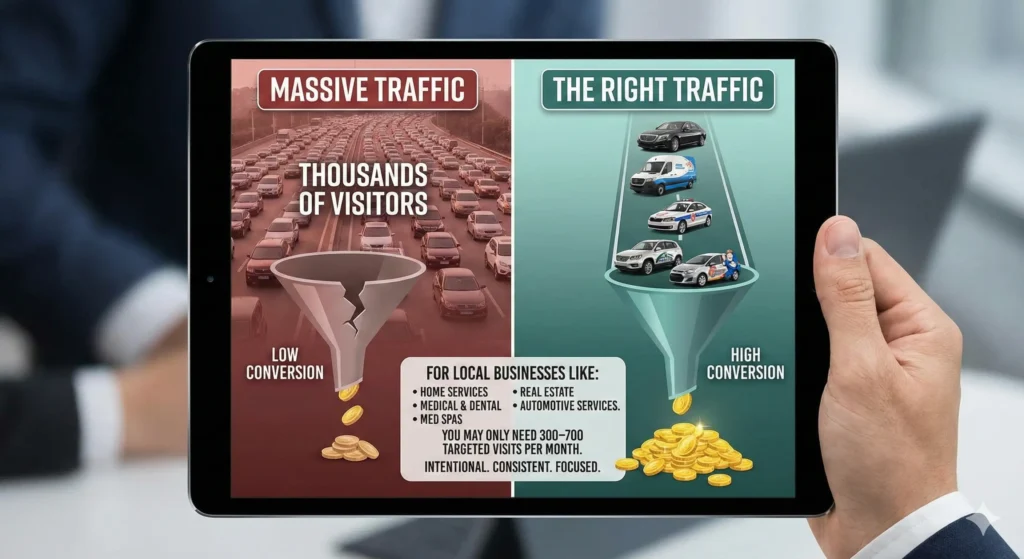
Many business owners assume they need tens of thousands of visitors to see results.
Most local businesses don’t.
For industries like:
• Home services
• Medical & dental
• Med spas
• Real estate
• Automotive services
You may only need 300–700 targeted visits per month to reach meaningful revenue goals.
We’ve seen six-figure businesses hit their numbers with less—simply because their visibility was intentional, consistent, and focused.
Why Consistency Beats Spikes
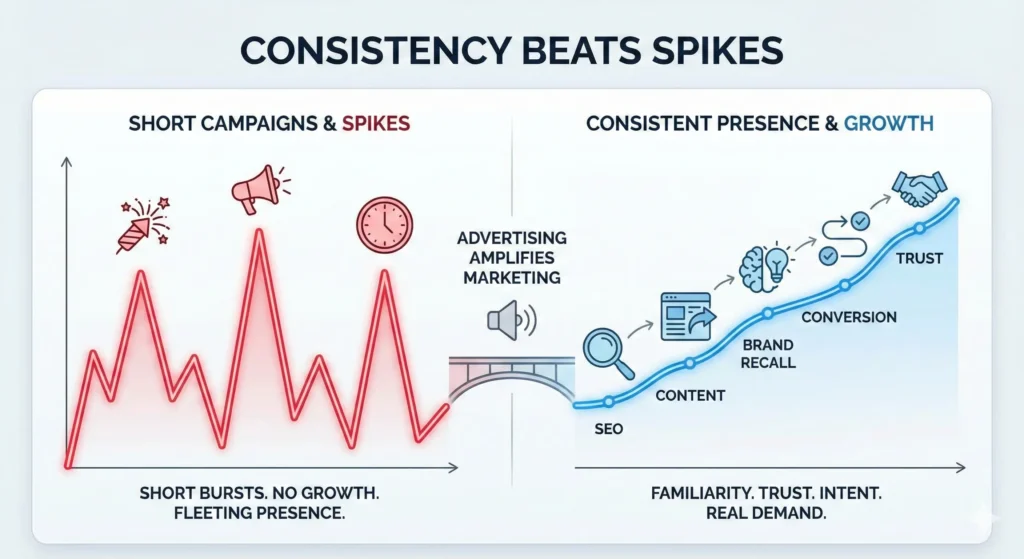
Short campaigns can create short bursts of traffic.
But growth doesn’t come from bursts.
It comes from presence.
When people repeatedly encounter your brand across the digital spaces they already use, familiarity builds. Trust builds. Intent builds.
That’s how real demand forms.
A consistent visibility layer also strengthens your other marketing:
• SEO performs better
• Content gets more exposure
• Brand recall improves
• Conversion paths become clearer
Advertising doesn’t replace marketing—it amplifies it.
What Most Businesses Don’t Know About Their Own Website

When new clients come to us, we ask one simple question:
“How many people visit your website each month?”
Nine out of ten times, they don’t know.
That’s a problem.
You can’t optimize what you don’t measure.
You can’t grow what you don’t understand.
And you can’t control what you don’t track.
Without data, growth becomes guesswork.
How Proburb Approaches Visibility

Most agencies run campaigns.
Proburb builds visibility systems.
A campaign is temporary.
A system is continuous.
Our model is designed to:
• Create stable inbound demand
• Maintain consistent presence
• Adapt to local behavior
• Support your existing marketing
• Turn your website into a working asset
We don’t chase spikes.
We build infrastructure.
Final Thought
Your website should be doing the work of a sales system:
• Generating consistent visibility
• Driving targeted traffic
• Supporting long-term growth
If it’s not, it doesn’t mean your business is broken.
It means your visibility isn’t structured.
The data already exists.
Your customers are already searching.
The question is:
Are you showing up consistently when they do?
Want to See How This Applies to Your Market?
If you’d like to understand how your website, local demand, and visibility currently stack up, we walk through this during our initial consultation.